

What Does “Controlling Pronation” Mean in Running Shoes?
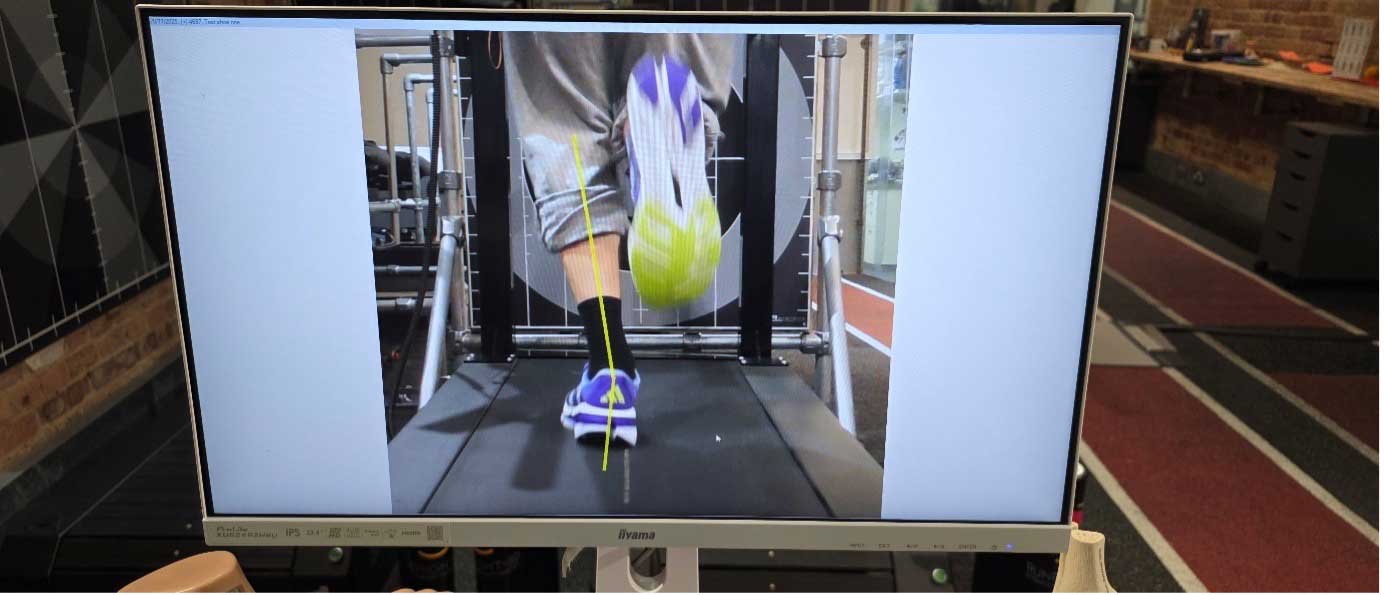
For decades, runners have heard the same story:
If your foot rolls inwards too much (overpronation), you need a stability or motion-control shoe. If it doesn’t, go neutral. Simple, right?
The idea of controlling pronation by supporting the arch to prevent injury became the foundation of running shoe design through the 1990s, 2000s, and early 2010s. If during a gait analysis your ankle showed even a hint of inward roll, you’d walk out of your shoe store with a shoe reinforced on the inside, designed to “correct” your customer’s movement.
But here’s the twist:

Running Injury rates haven’t dropped.
Despite decades of biomechanical fine-tuning and high-tech control features, runners are still getting hurt at the same rates.
The truth is, ‘controlling pronation’ wasn’t the magic fix we were led to believe.
So here is the Truth about pronation
In the nineties and noughties, ‘stability’ and ‘motion-controlled’ shoes were seen as superior. After all, they supported the arch, reduced pronation, and in doing so protected the runner. But pronation itself isn’t the enemy — it’s actually a brilliant natural shock absorber, built into your body’s design.
When your foot rolls in slightly, it helps distribute impact, store elastic energy, and adapt to uneven ground. Blocking that motion can disrupt your body’s mechanics and — ironically — increase the risk of injury.
Of course, extremes matter. Too much or too little pronation can cause issues, but that’s a spectrum — not a diagnosis.
What Happens When We Block Pronation?

Work With the Body, Not Against It

Today’s best running shoes don’t try to control you — they help you move better.
- Lightweight PEBA foams offer powerful energy return.
- Carbon plates improve stride efficiency.
- Rocker geometries guide your motion naturally.
These shoes don’t stop pronation; they’re designed to optimise it. By shaping and guiding your foot through each phase of contact, you enhance performance and reduce fatigue.

Today, RUNRIGHT-3D is the most advanced gait analysis system available to retailers. Instantly find your customers’ perfect shoes, which enhance their biomechanics and movement from initial contact to toe-off.
Don’t settle for less — choose RUNRIGHT-3D now!
How RUNRIGHT-3D Changes the Game
At RUNRIGHT-3D, they have turned complex performance data into simple, actionable insights for retailers and runners.
Their system benchmarks shoes against elite biomechanics, showing how each model scores on efficiency, support, and technical quality. The closer a shoe aligns with elite-level motion, the higher its performance potential.
We understand not every runner is an elite. That’s why their data includes real-world metrics — factoring in age, gender, height, and running style — to give a personalised performance profile for every customer.
With RUNRIGHT-3D, you can confidently identify shoes that work with your customers’ unique biomechanics.

