Vertical Oscillation
Why it’s important
In running, some vertical movement is normal and necessary, but excessive bounce is generally linked with poor running economy, meaning you use more oxygen and energy at the same pace. Recent reviews report that lower vertical displacement is moderately associated with better running economy.
It also matters because it can hint at how you’re producing force. If your stride is overstriding, your cadence is low for the pace, or you are losing stiffness through the ankle-leg system, you may bounce more than needed. That does not prove your form is “wrong,” but it can be a useful clue when viewed alongside cadence, stride length, and ground contact time. Garmin defines it as the vertical motion of your torso during running, and many coaches use it as one piece of the form picture rather than a standalone score.
Running Drills
Nudge your cadence up slightly.
- Aim for ~+3–7% at your easy/steady pace (use a metronome or music).
- Cue: “Quick feet, same stride length.”
Add short strides (fast but relaxed).
- After easy runs: 4–8 x 15–25 sec at ~mile/3–5K effort, full easy jog recovery.
- Focus on light contact and tall posture.
Hill sprints for “snap.”
- 6–10 x 8–12 sec on a steep hill, walk back recovery.
- Hills naturally encourage good mechanics (less overstriding) and fast force application.
Clean up your landing mechanics.
- Cue: “Land under hips, push back, not up.”/
- Many runners lengthen GCT by overstriding/braking; think slight forward lean from the ankles and a quiet, “under you” footstrike.
Strength and Conditioning Exercises
Pogo Jumps
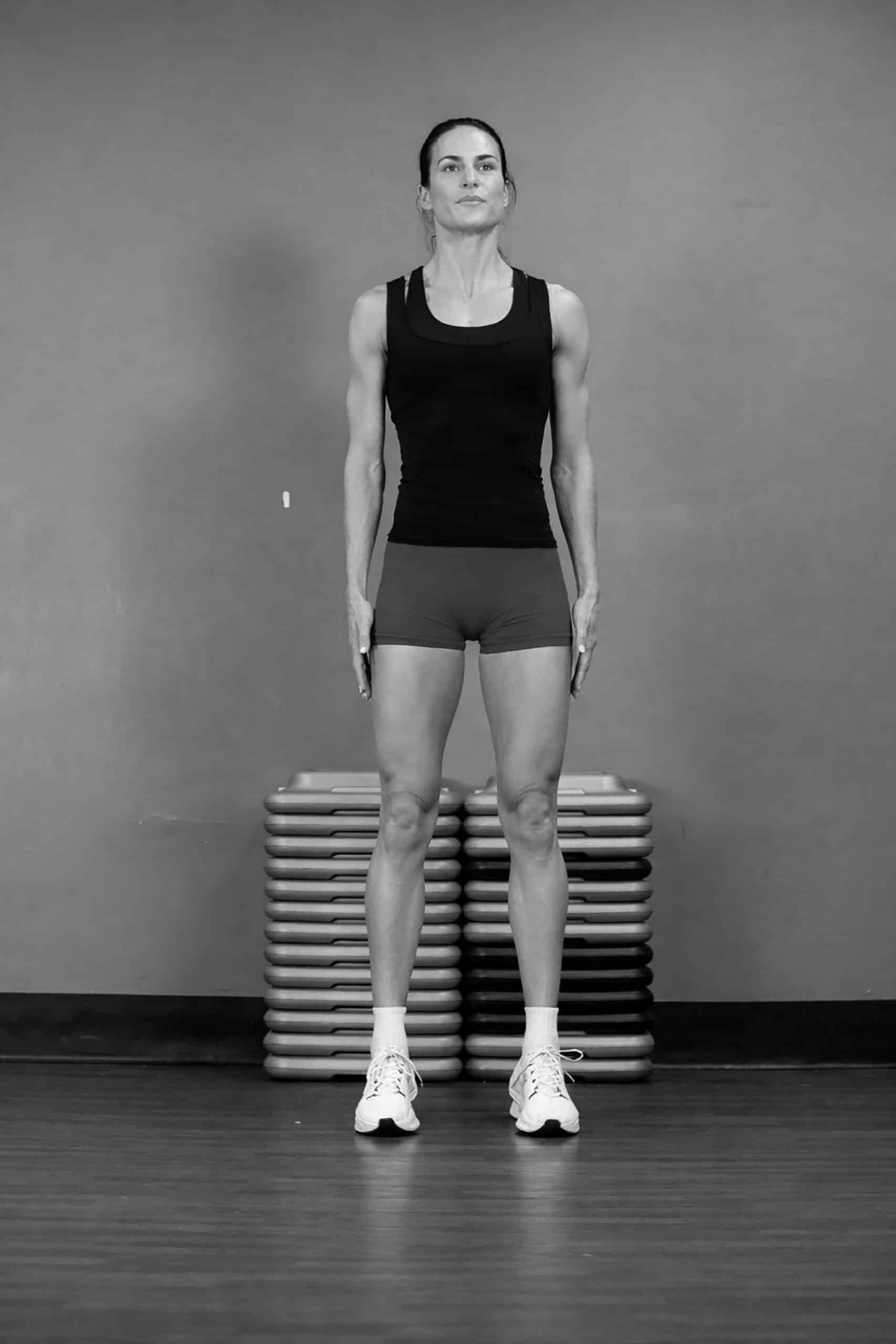
1
Pogo Jumps, also known as Ankle hops, help reduce your GCT and overstriding by teaching your body to land under your centre of mass.
To execute Pogo Hops, stand upright (not rigid) with your feet hip-width apart with your hands resting by your side. (You can place your hand on your hips)
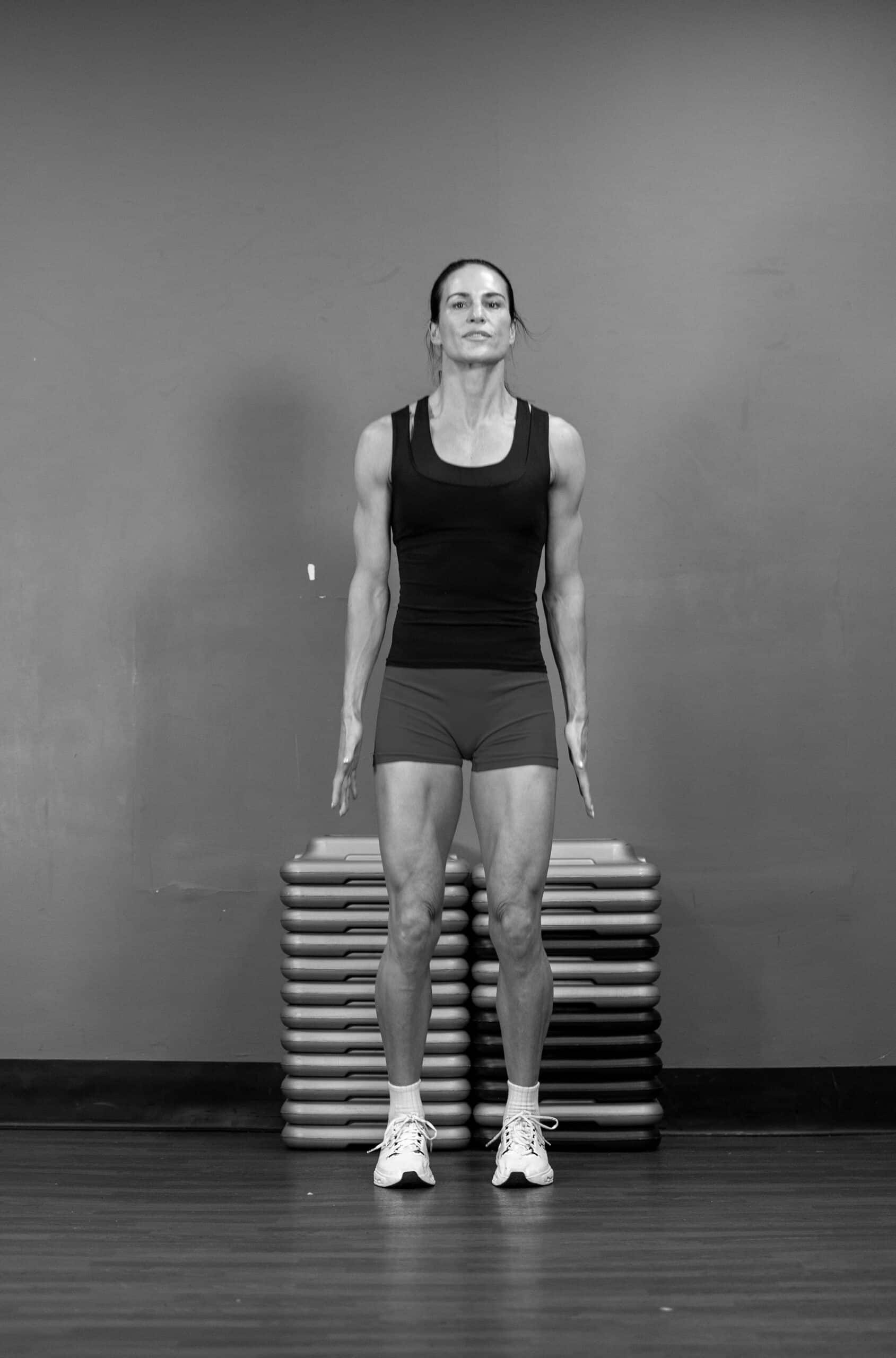
2
Now flex from your ankles (mostly), knees and hips (slightly), then load the balls of both feet.
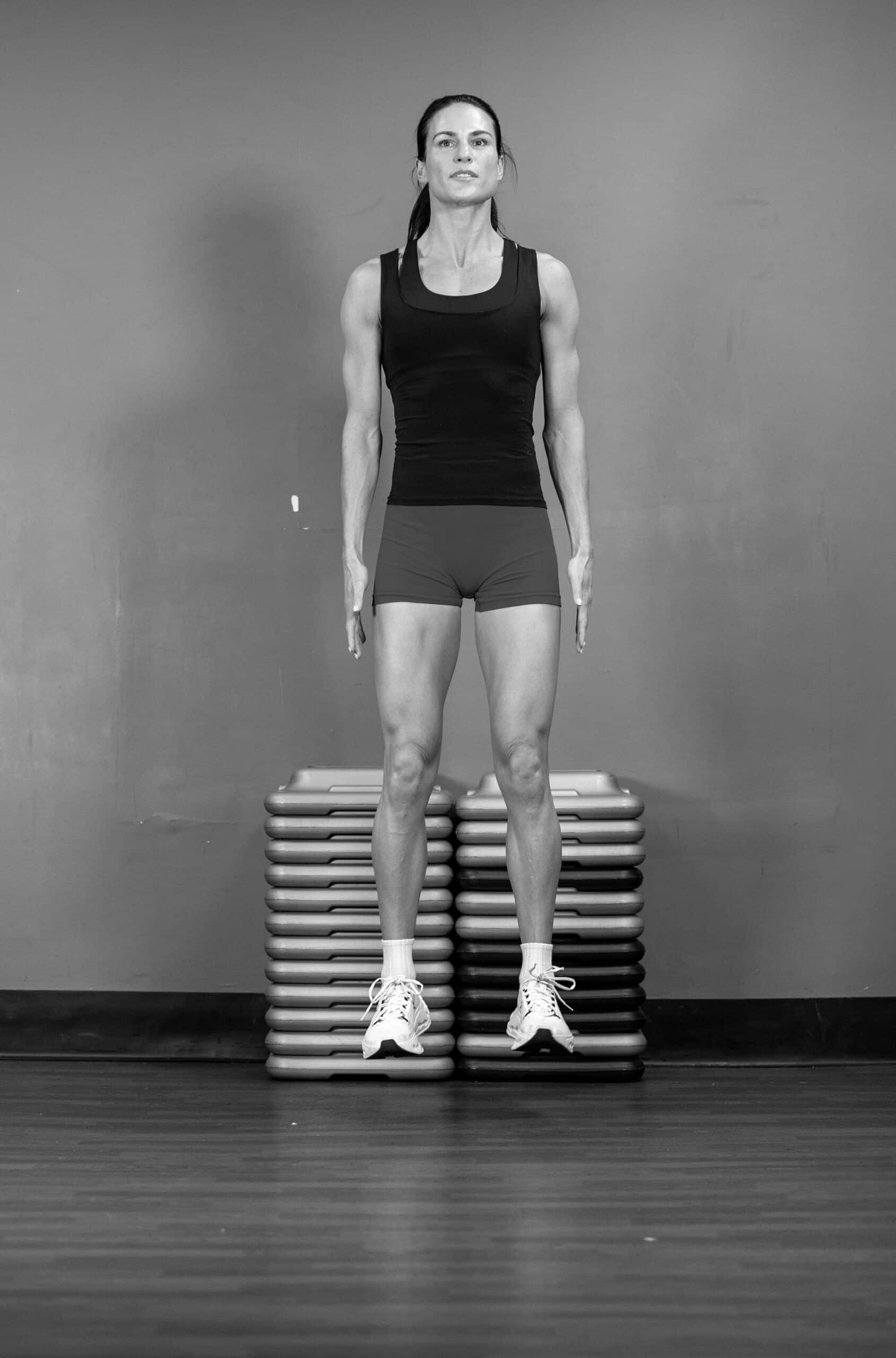
3
Now push upwards as powerfully as you can, keeping your back straight. When you land, repeat as quickly as possible, keeping jumps quick and springy. You will self-modulate your height and speed.
Gradual progression is key; start with lighter, softer pogo jumps and slowly increase the height to build strength.
Increase duration and intensity from 10 seconds to a maximum of 1 minute.
2-4 sets, 3 sessions per week.
Focus on quality, stiffness, and control, not long duration.
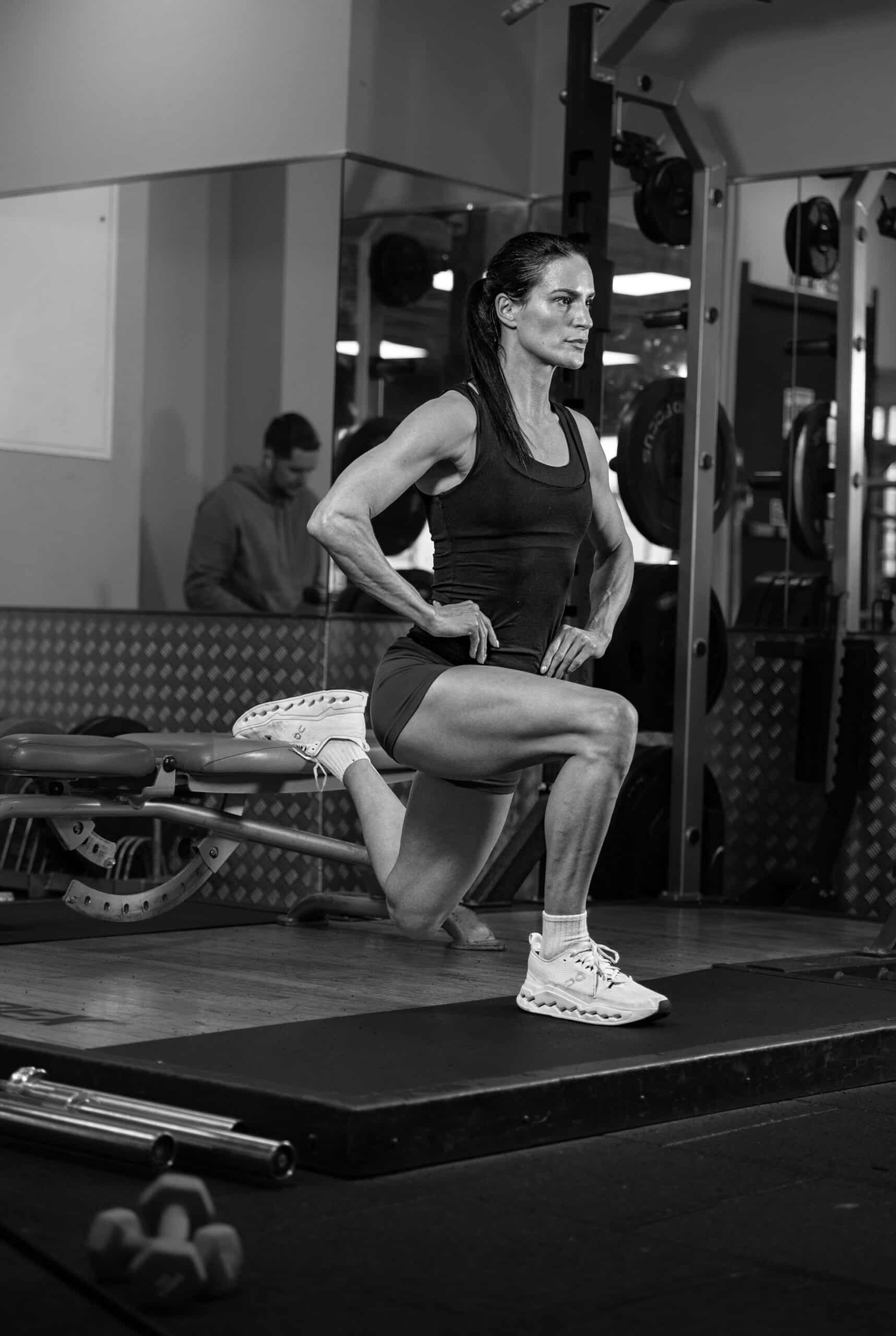
Bulgarian Split Squats Unweighted
Running is a single-leg activity. Bulgarian Split squats strengthen your glutes, quads, and hip control, helping you stay stable over the stance leg rather than bouncing upward and swaying side to side. A simple starting point is 2 to 3 sets of 6 to 10 reps per leg, using only your body weight.
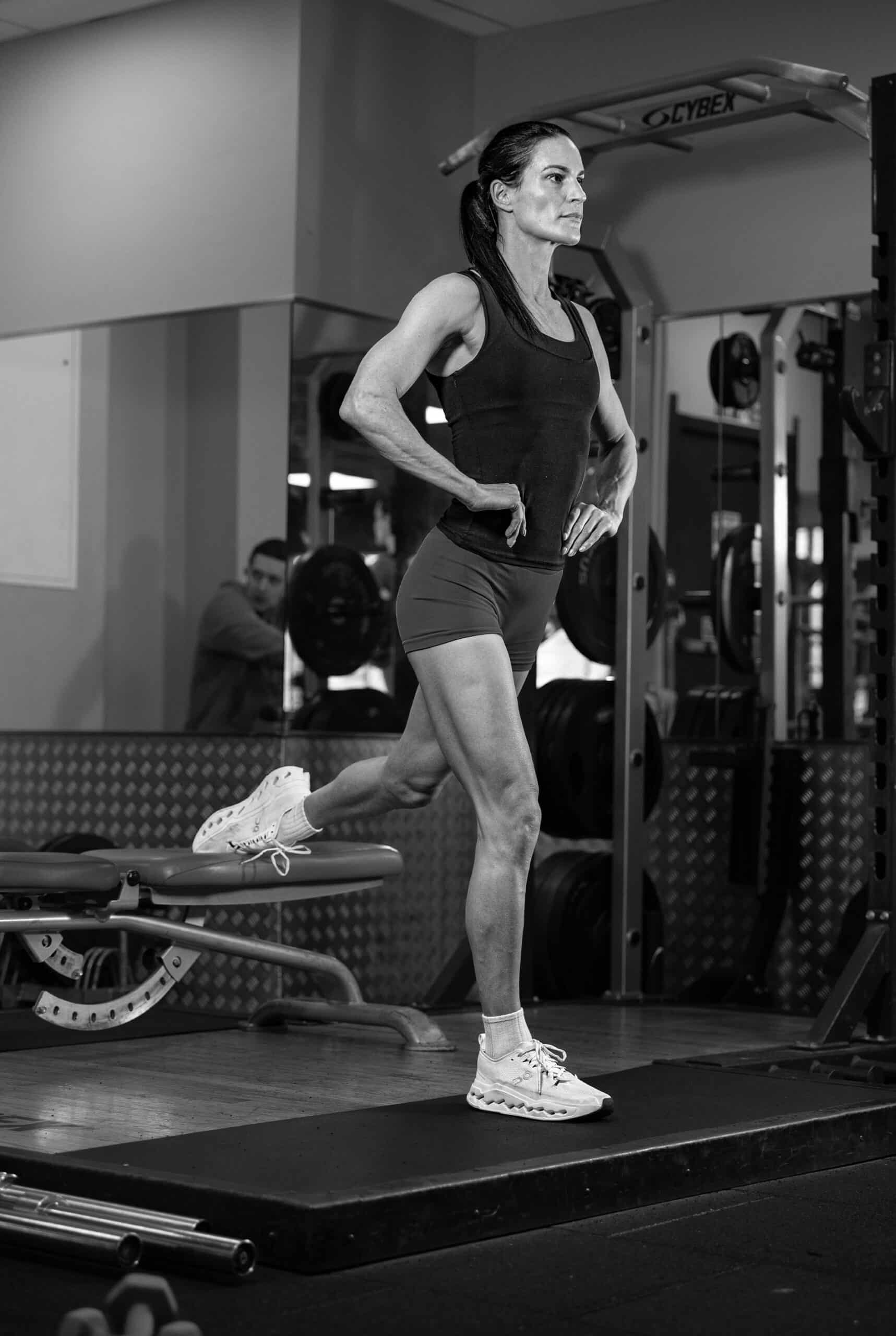
1
Stand a couple of feet in front of a bench or sturdy chair. Put one foot behind you on the bench. Keep the other foot far enough forward that when you lower down, your knee stays roughly over your foot instead of being forced way past your toes.
Brace your core and keep your chest up (slight lean forward). Most of your weight should stay in the front leg.
2
Lower yourself by bending the front knee and letting the back knee move toward the floor. Go down under control until your thigh is parallel to the ground, or as low as you can without losing balance or form. Keep your knee tracking along the line of your foot
Push through the heel and midfoot of the front foot to stand back up, move slowly (no bounce at the bottom) and stay in balance. This is one rep.
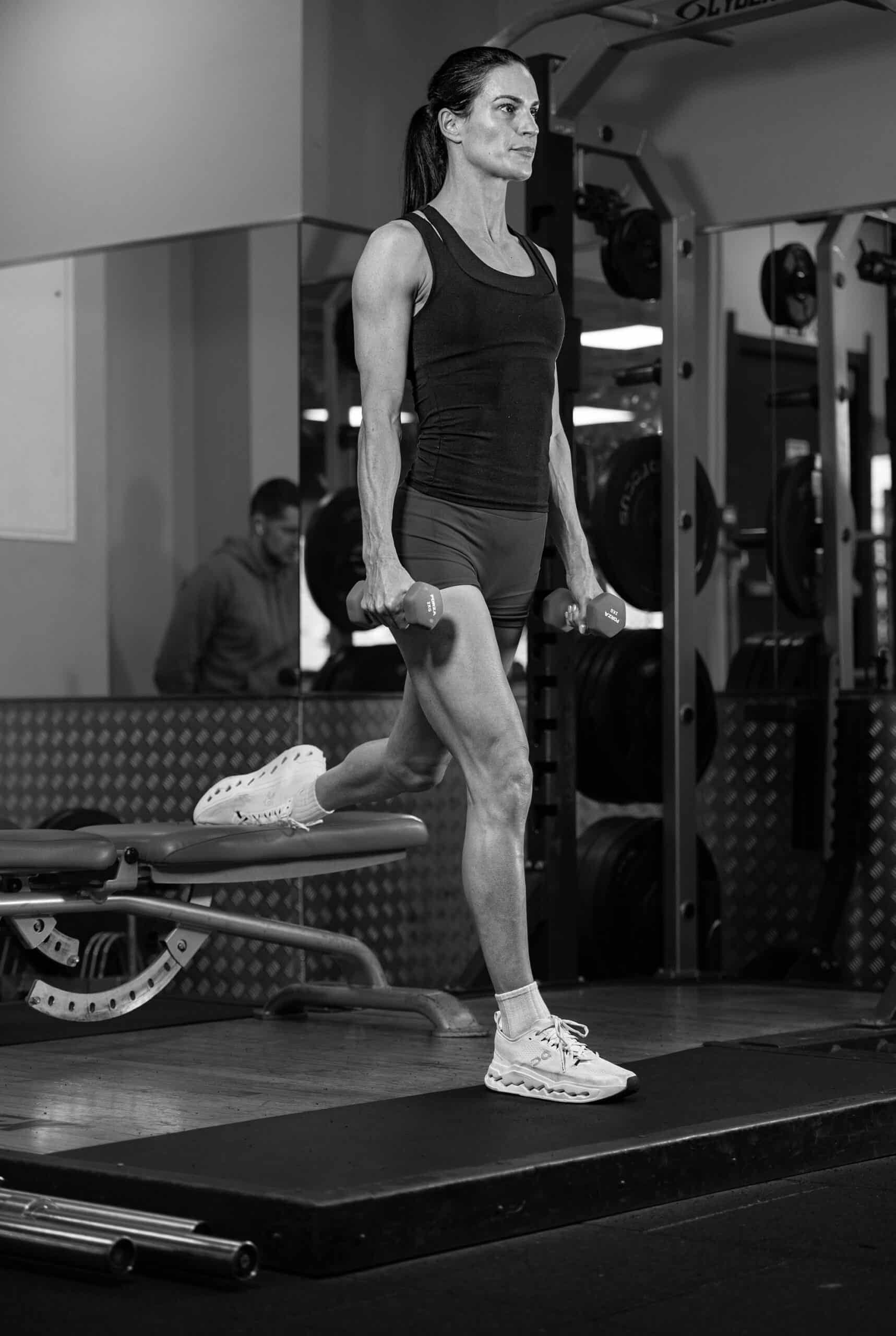
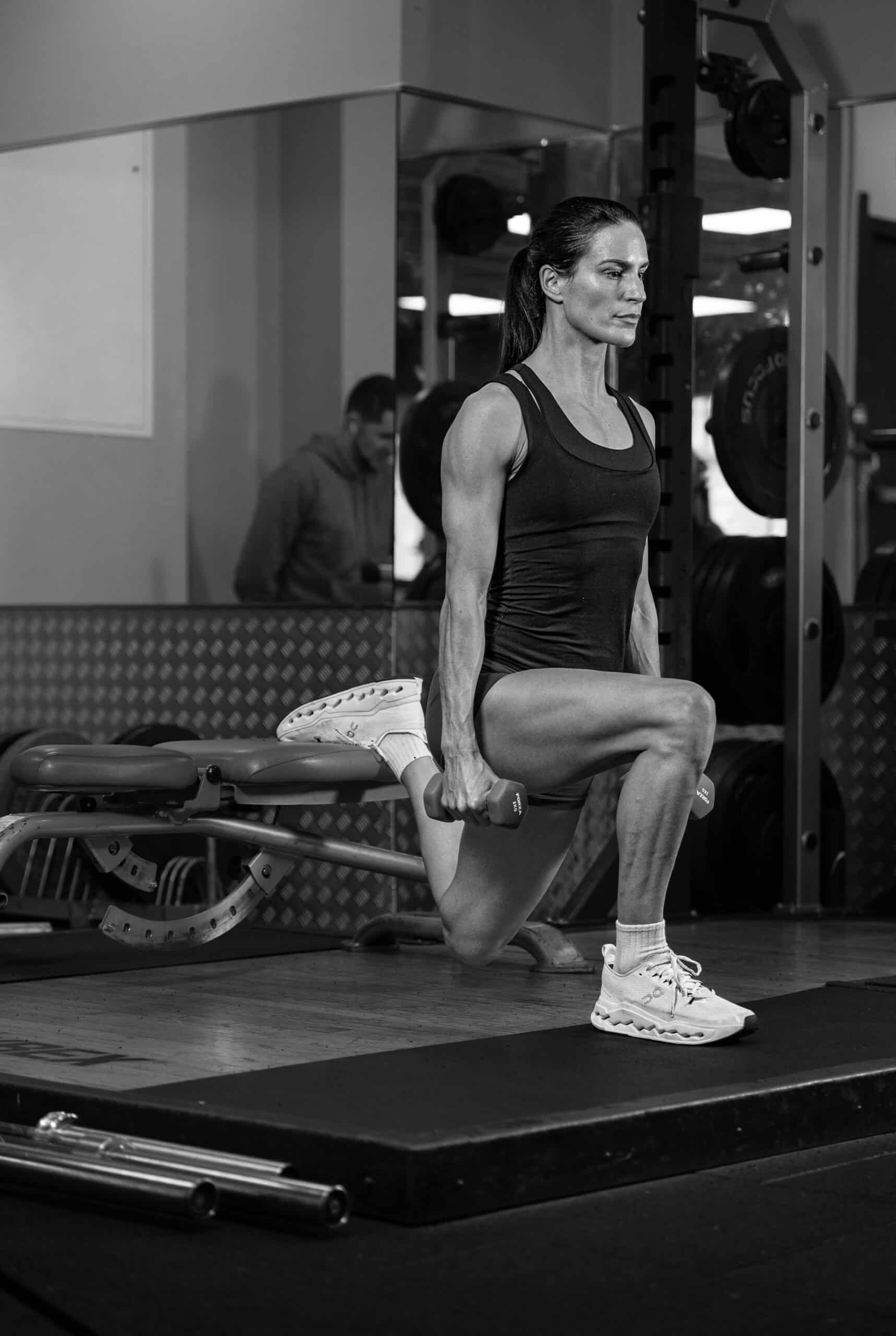
Bulgarian Split Squats Weighted
1
Using small dumbbells, a weighted backpack or even a weighted shopping bag or water containers. Now execute the exercise exactly as the unweighted Bulgarian Split Squat.
2
Increase the weight as you feel comfortable. Generally, if you can complete 3 sets of 10 without difficulty and maintain complete stability, then raise the weight. The goal here is not to set PRs but to maintain good control while keeping perfect stability.
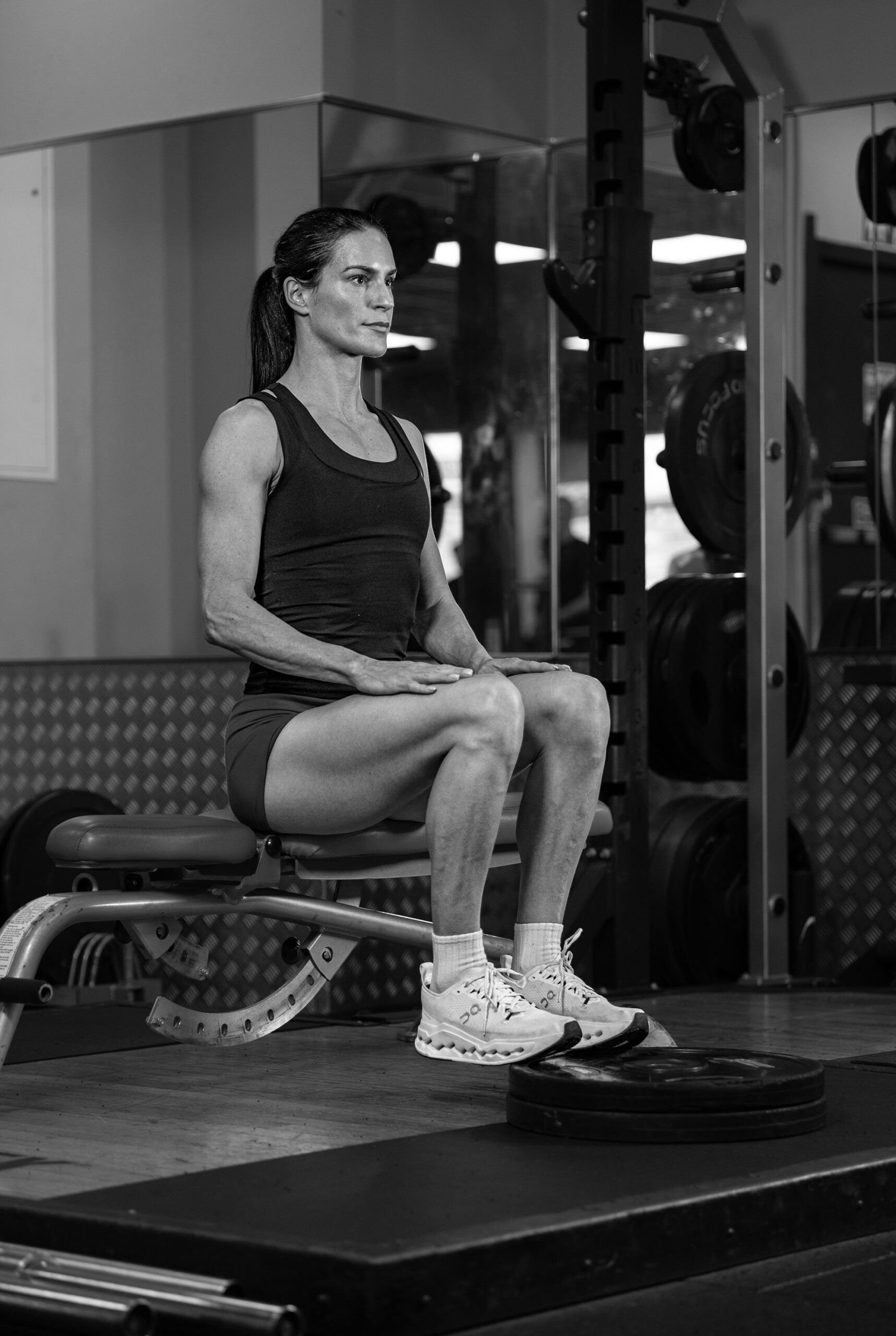
Seated Calf Raises Unweighted
1
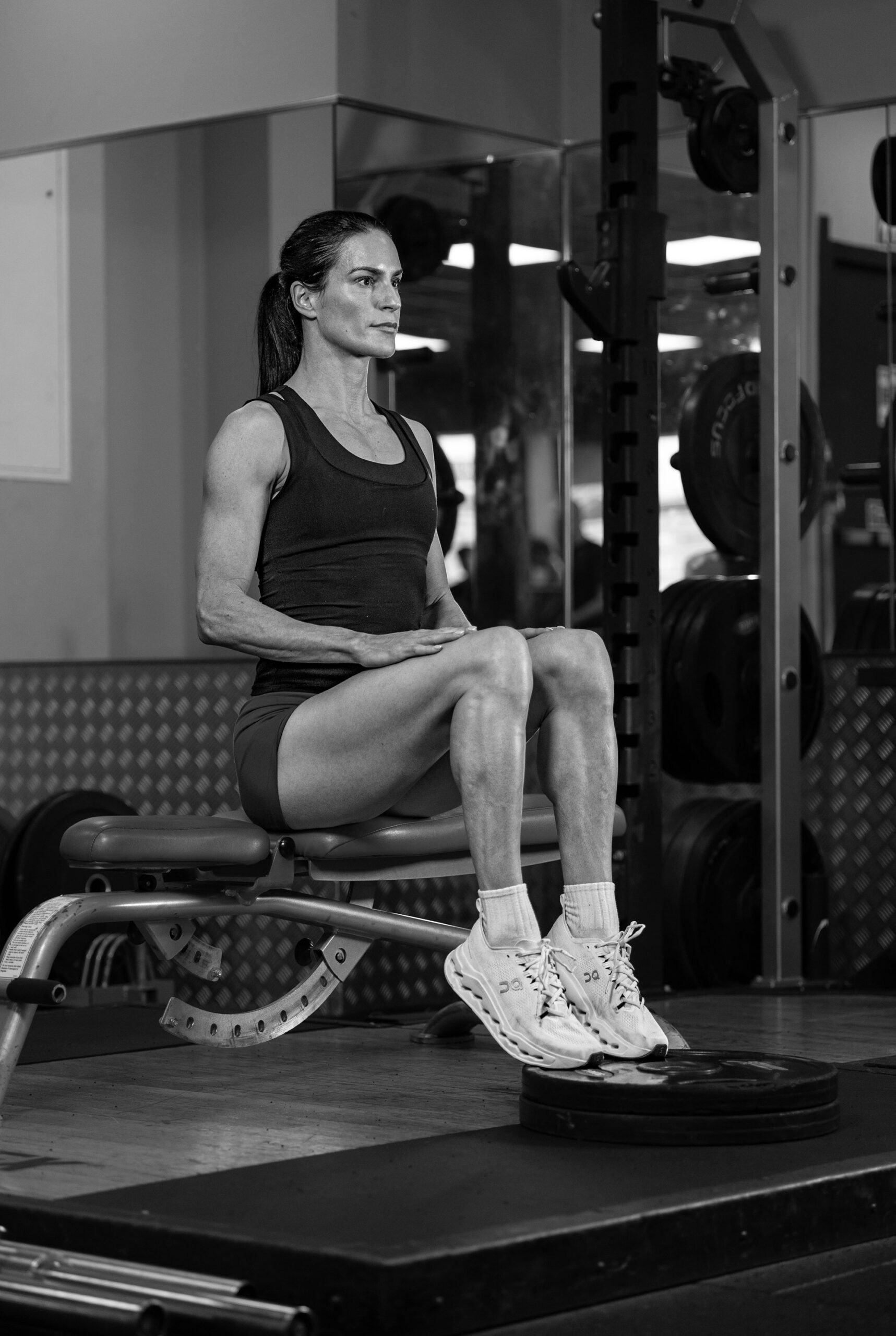
Find a chair or bench to sit on, then place the soles of both feet on something elevated so you can lower your heels. Your lower leg should be at 90% to your upper leg (thigh).
As you can see, we utilised two weights for this purpose. Place your hands on your thighs
2
Keep your back straight and raise your heels by engaging your calf muscles. Hold for 5 seconds, then lower.
Perform 4 sessions a week, with 4 sets per session of 10 repetitions.
Once you have mastered this, you can move on to weighted seated calf raises.
Seated Calf Raises Weighted
1
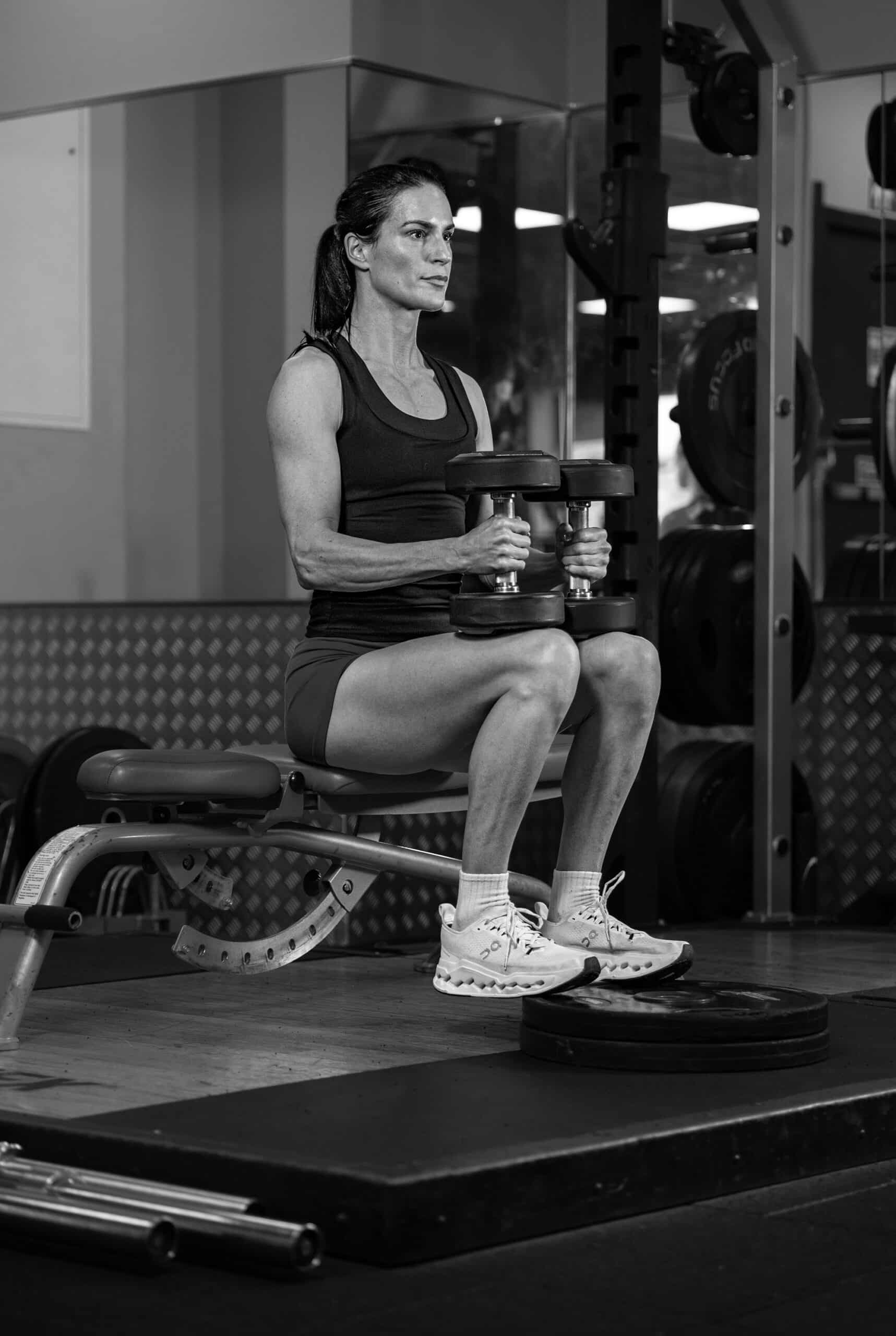
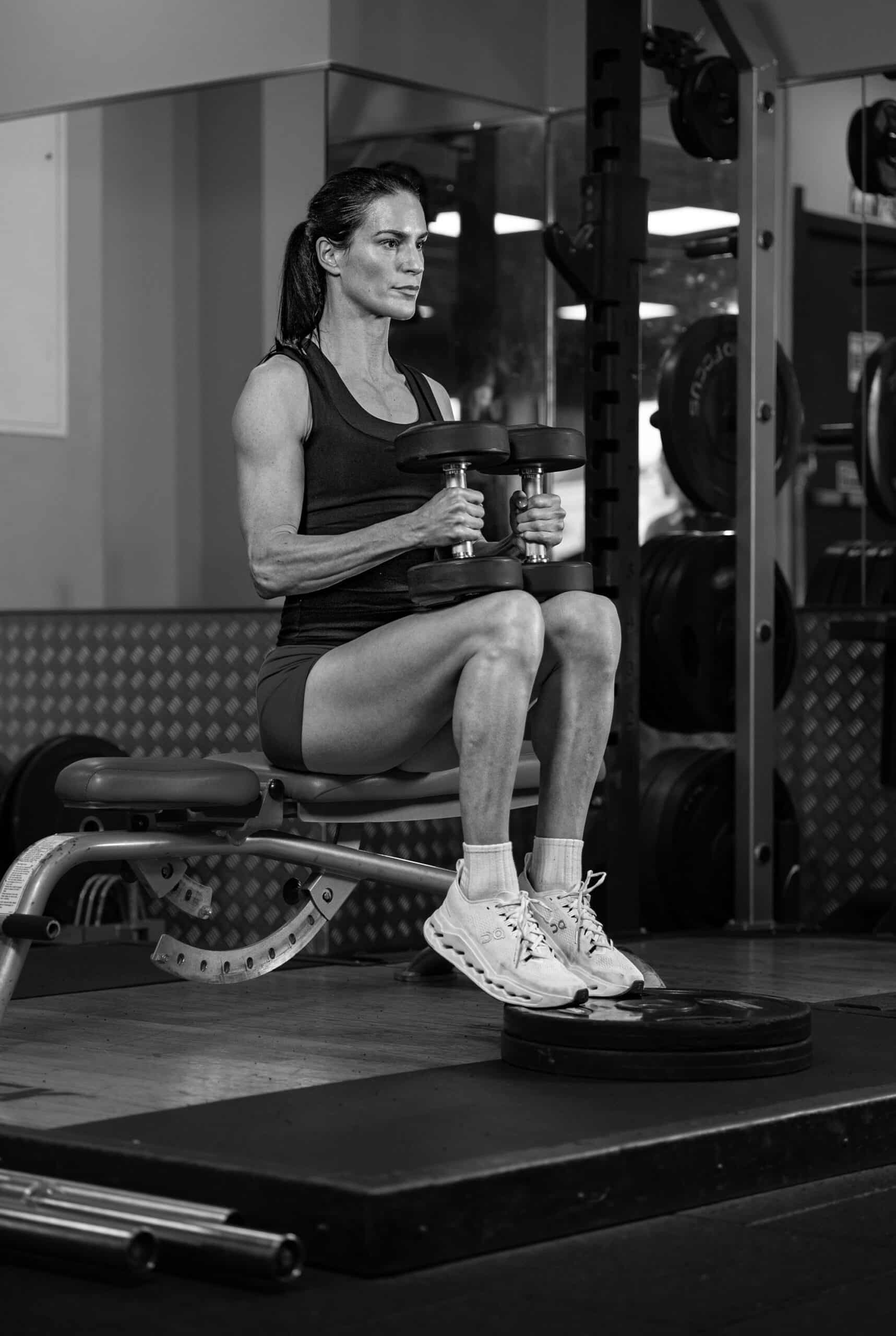
Set yourself in the same position as the unweighted position. Choose your weight; if you’re not sure, start with a light one.
Take hold of them and place them carefully on your knee, directly above your heels.
2
Keep your back straight and raise your heels by engaging your calf muscles. Hold for 5 seconds, then lower.
Perform 4 sessions a week, with 4 sets per session of 10 repetitions.
As you master this, you can increase your weight and reps.
RUNRIGHT-3D Explainers
Micrometrics
- EGround Contact Time
- EOverstride
- EVertical Stiffness
- EVertical Oscillation
- ECadence
-
Reduce your braking power and run better