

It might seem like a no-brainer to charge for gait analysis; it massages your bottom line. But with many retailers and department stores already offering it for free, charging for it may hurt your sales. The trouble is customers won’t be able to tell the difference between a simple smartphone check and the advanced, evidence-based 3D analysis that RUNRIGHT-3D offers. To them, a gait analysis is a gait analysis, regardless of the technology or expertise involved.
You need to show how your service is streets ahead of the old video replay that some specialist running shops still rely on. [Even though Professor Benno Nigg*, a leading expert, found that choosing shoes based on foot type or pronation is too simple and could even lead to injuries].
So how can you explain that RUNRIGHT-3D is far better than older 2D video, or in-shoe pressure systems, etc? Tough, isn’t it? It would take too long to explain the difference to every customer, but I don’t think you need to.
Here is some food for thought:
Perceived value: This is how valuable a customer believes a product or service to be—not simply what it costs to provide.
It is the customer’s judgement of: “What am I getting compared with what I’m paying?”
Perceived value is influenced by:
• Quality and expertise
• Results or benefits promised
• Technology and equipment used
• Presentation and professionalism
• Trust and reputation
• Exclusivity or uniqueness
• Comparisons with other services
• Guarantees, reports and follow-up support
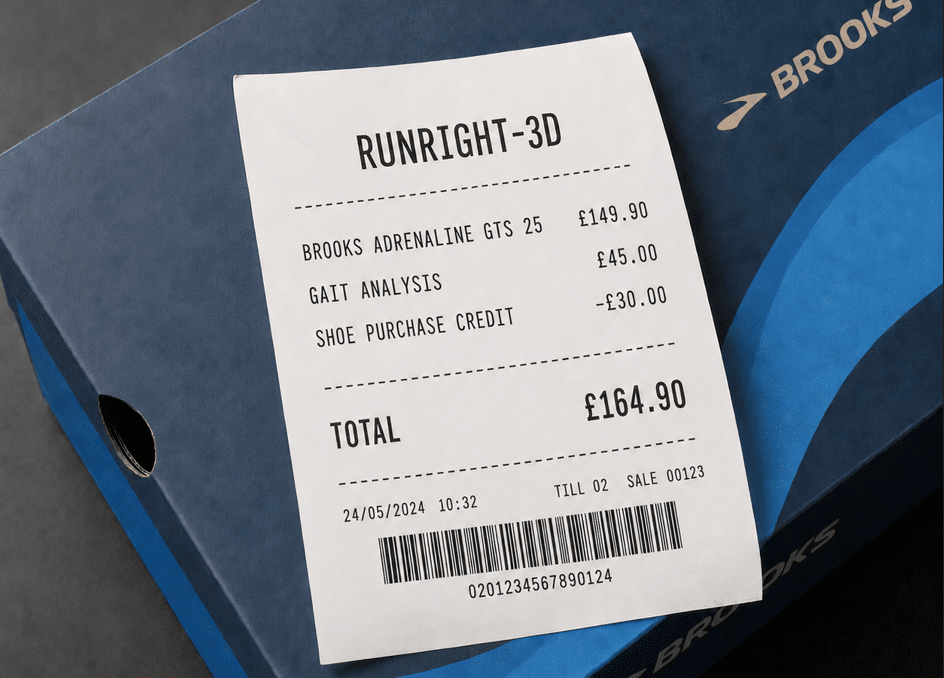
For example, a basic free gait analysis may have low perceived value because customers assume it is simply part of selling shoes. However, a £45 RUNRIGHT-3D analysis can feel like a genuine professional service, especially when it includes 3D technology, objective measurements, expert interpretation, and a detailed personalised report.
If you refund £30 when the customer buys shoes, the original £45 price still establishes the analysis’s value.
The customer then receives:
• A professional analysis valued at £45
• A £30 shoe-purchase credit
• A net analysis cost of £15
The important point is to describe the £30 correctly. Calling it a shoe-purchase credit may preserve perceived value better than calling it a gait refund, which could suggest the analysis was never really worth £45.
That is a strong proposition: £45 establishes professional value; £15 feels like an excellent customer benefit.
Obviously, you know your customers better than I do, but if you feel you could charge as above, then 80 pairs of shoes per week would achieve a net profit of £1,200 per month; now that’s worth the effort.
*Professor Benno Nigg’s work transformed our understanding of running shoes. He challenged the traditional belief that footwear should be selected by measuring pronation or foot type. Instead, he proposed that every runner has a preferred movement path and responds individually to footwear. The most appropriate shoe should work with the runner’s natural movement—not attempt to force it into a predetermined pattern. His thinking strongly supports RUNRIGHT-3D’s approach: test the runner’s actual response to each shoe rather than trying to predict it from a static measurement or a single foot movement. Nigg’s 2015 paper